Tuesday, 12 July 2016

China v Philippines: Court to rule on South China Sea

The Permanent Court of Arbitration in The Hague is to rule in a dispute between the Philippines and China over maritime claims in the South China Sea - particularly who has the right to exploit resources in the strategic territory.
The ruling on Tuesday is expected to further increase tensions in the region, where China's increased military assertiveness has spread concern among its smaller neighbours and  is a point of confrontation with the United States.
China has boycotted the court, saying it does not have jurisdiction to decide on the matter and has campaigned for months to discredit the outcome.
In advance of the ruling, the China Daily newspaper, which is published by the government, topped its front page on Tuesday with a picture of Woody Island in the South China Sea emblazoned with the words: "Arbitration invalid".
State-run news agency Xinhua included headlines such as: "South China Sea arbitration abuses international law: Chinese scholar".
The Philippines embassy in China warned its citizens to be "careful" due to tension before the ruling and to avoid political debate. The embassy also urged its citizens to carry identification papers "at all times" and report any threat received to the embassy and Chinese police.

Key sea lane

China asserts sovereignty over almost all of the South China Sea, a strategic waterway through which more than $5 trillion of world trade is shipped each year, despite rival claims from the Philippines and other Southeast Asian nations.
The US says it wants the crucial sea lane to be treated as international waters.
Both Beijing and Washington have accused each other of provocations in the South China Sea.
Al Jazeera's Adrian Brown, reporting from Beijing, said China's leaders would "simply shrug off the tribunal's rulings.
"In recent weeks, they've labelled the court illegal, irrelevant and said it had no jurisdiction. And they appear to care little about Washington's renewed threats and warnings." 
Karl Friedhoff, an Asian affairs expert at the Chicago Council on Global Affairs, said China had made it clear that it was in no "mood for negotiation".
"They are really trying to get access to the open ocean, so they can start to really project their power," he told Al Jazeera.
Friedhoff added, however, that if Beijing decided to press the matter aggressively with the Philippines and other Southeast Asian countries, "then it is going to undercut the soft power that China has worked so hard to grow".
Even if Beijing ignores the court's decision, it is significant as it will be the first time that a legal challenge has been brought against China in the dispute.
"While China insists that it does not care about the decision, its actuations clearly reveal that it is worried about its image," Alexander Yano, a former diplomat and top military commander in the Philippines, told Al Jazeera.
"Beijing is certainly concerned about the negative psychological impact in the international arena should the Hague court rules in favor of the Philippines."

China's expanding presence

Including the Philippines, the dispute draws in a total of five countries with overlapping claims in the 3.5 million square kilometre sea, where China has been expanding its presence by building artificial islands and dispatching patrol boats that keep fishing vessels from other countries away.
The arbitration court ruling will not decide on matters of territorial sovereignty, but will apply the UN Convention on the Law of the Sea in determining which countries can claim economic exploitation rights, based on geographic features.
The court has no power of enforcement, but a victory for the Philippines could spur Taiwan, Vietnam, Malaysia and Brunei, which also have overlapping claims, to file similar claims.

Kikosi bora cha Euro 2016 chatajwa

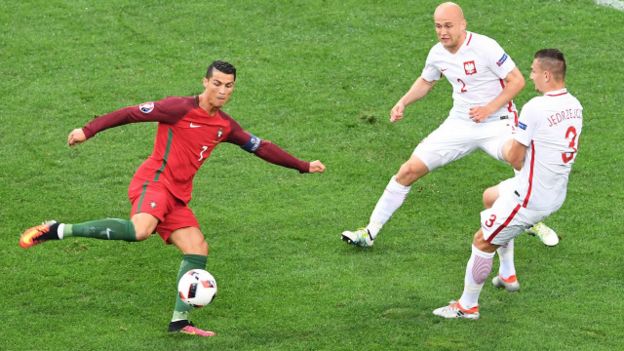
Mshambuliaji wa Ureno Cristiano Ronaldo, anayechezea Real Madrid ya Uhispania, ni miongoni mwa wachezaji walioorodheshwa kwenye kikosi bora cha michuano ya Euro 2016 kilichotangazwa na Shirikisho la Soka Ulaya, Uefa.
Ronaldo aliwahi kujumuishwa katika kikosi sawa mwaka 2004 na mwaka 2012.
Raia mwenzake, Pepe pia yupo kwenye kikosi hicho na aliwahi pia kujumuishwa 2008 na 2012.

RonaldoImage copyrightAFP GETTY
Image captionNi mara ya tatu Ronaldo kujumuishwa kikosini

Awali, kulikuwa kukitajwa kikosi cha wachezaji 23 lakini wakati huu kumetajwa kikosi cha wachezaji 11.
Kikosi kamili kinajumuisha (4-2-3-1): Rui Patrício (Ureno); Joshua Kimmich (Ujerumani), Jérôme Boateng (Ujerumani), Pepe (Ureno), Raphaël Guerreiro (Ureno); Toni Kroos (Ujerumani), Joe Allen (Wales); Antoine Griezmann (Ufaransa), Aaron Ramsey (Wales), Dimitri Payet (Ufaransa); Cristiano Ronaldo (Ureno).

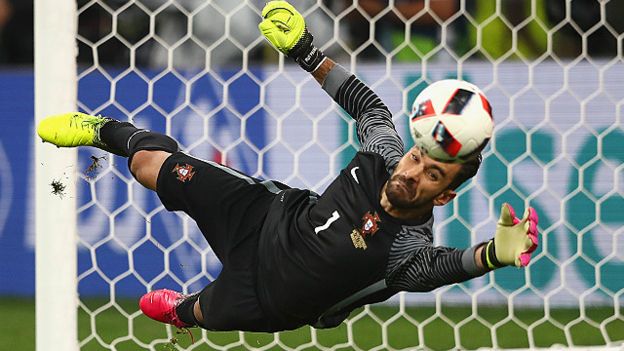
PatricioImage copyrightAFP
Image captionRui Patricio, mlindalango wa Ureno

Kikosi hicho kiliteuliwa na jopo la kiufundi cha Uefa lililojumuisha, miongoni mwa wengine, Sir Alex Ferguson na David Moyes.
“Tunaamini kikosi hiki cha wachezaji XI kinawakilisha wachezaji bora zaidi walioshiriki michuano,” amesema, Ferguson, ambaye ni balozi mwema wa ukufunzi wa Uefa.

WikiLeaks Publishes More Than 1,200 Hillary Clinton Iraq War Emails From Her Private Server


On Saturday, Hillary Clinton spent three and a half hours being interviewed by the FBI over the private email server she used as Secretary of State. The scandal has cast a shadow over Clinton’s presidential campaign and weighs heavily upon her perceived trustworthiness as a candidate. Attorney General Loretta Lynch has revealed that she willdefer to the eventual FBI decision on whether or not to indict Clinton, but the prospect of an actual indictment doesn’t seem likely.
Regardless of the projected outcome, the controversy remains lodged in the public consciousness, and WikiLeaks celebrated Independence Day by publishing 1,258 of Clinton’s emails. This data was released by the State Department in February (through a Freedom of Information request), and WikiLeaks gathered up all emails tied to the Iraq War in one tidy dump.

Curious visitors can search by sender, subject, and keyword, but good luck on finding anything juicy in a timely fashion. Countless emails, particularly from Clinton aide Huma Abedin, are simply copy/pastes of AP and Washington Post articles. There are plenty of forwarded letters from other world leaders to Clinton too. One tidbit refers to a note from Bono and wife Ali, and there are several messages about an Oprah appearance. At one point, Abedin apologizes for Al Gore’s pushiness in wanting to speak with Clinton.
Of course, it is impossible to comb through every one of these emails in one morning. Perhaps someone will dig up a true bombshell at some point, but the most revealing detail in this investigation actually arrived last week. During a deposition, Abedin admitted that Clinton burned a number of daily schedules: “If there was a schedule that was created that was her Secretary of State daily schedule, and a copy of that was then put in the burn bag, that … that certainly happened on … on more than one occasion.”
In response, former U.S. spokesman at the United Nations Richard Grenell told the New York Post, “I’ve never seen anyone put their schedule in the burn bag — because every one of them had a state.gov email address and therefore their daily schedules became public records, as required by law.” Grenell served at the State Department for eight years under two other Secretaries of State, who both freely passed around their schedules. Why Clinton burned her schedules shall remain a mystery.
In the meantime, this WikiLeaks dump will remain big news. In June, founder Julian Assange spoke with ITV with assurances that this data drop would provide “enough to indict her.” But he also believed that Lynch would never indict Clinton: “That’s not possible that could happen.”